Most posture problems aren't actually structural. Your spine isn't permanently knocked out of alignment. What's really stuck is the soft tissue, namely the muscles, fascia, and tendons that have settled into a chronic position and now push back whenever you try to correct it. That's exactly why a premium massage treatment in American Fork can make such a noticeable difference for people dealing with poor posture. Years of sitting at a desk shorten the hip flexors. Hours of looking down at a screen load up the neck extensors and tighten the front of the chest. Long stretches behind the wheel stiffen the thoracic spine and pull the shoulders forward into a rounded position.
These patterns settle into the tissue, and the tissue holds them. Massage alone does not fix posture, but specific techniques address the shortened, overactive muscles that pull the body out of alignment. Removing that pull is a necessary step before corrective exercise can work effectively.
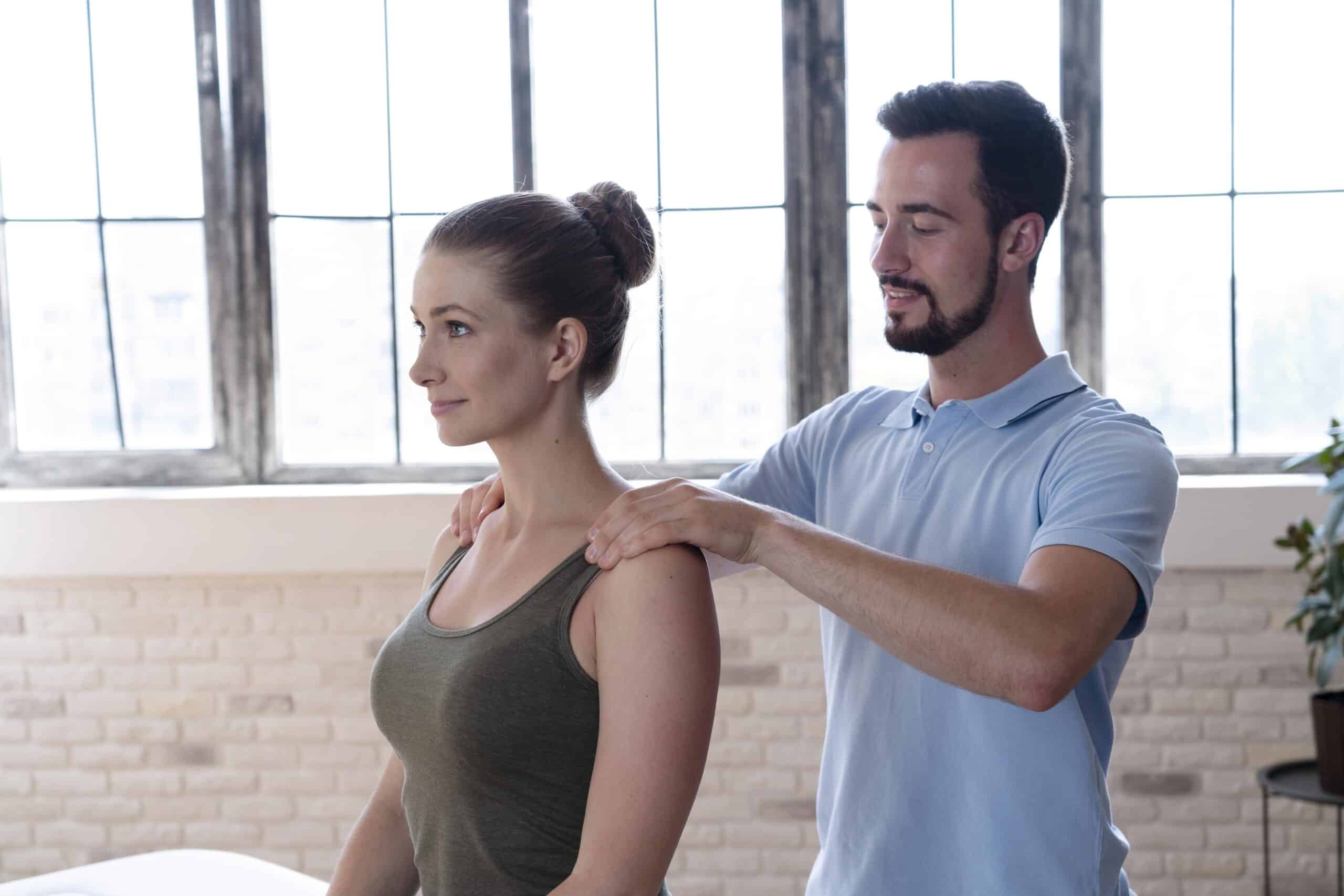
How Soft Tissue Patterns Create Postural Problems
Posture is maintained by the balance of tension between opposing muscle groups. When one group becomes chronically shortened, its opposing group becomes chronically lengthened and functionally weak. This imbalance creates the visible patterns most people recognize in themselves: forward head, rounded shoulders, anterior pelvic tilt, hyperextended knees.
The shortened, tight muscles are the primary targets for massage. Deep tissue massage, trigger point therapy, and myofascial release work through these shortened patterns by applying sustained pressure to release the holding tension. Once the shortened muscles release, the opposing muscles can begin to function more normally, which is what makes subsequent corrective exercises more effective.
Deep Tissue Massage for Postural Muscles
Deep tissue massage applies slow, sustained pressure through the superficial layers of muscle to reach the deeper tissue where chronic tension lives. For postural work, the primary targets depend on the pattern being addressed.
For clients with forward head posture, the focus goes to the posterior cervical muscles: the upper trapezius, levator scapulae, and splenius capitis. For clients with rounded shoulders, the pectoralis major and minor are the priority. For clients with anterior pelvic tilt, the hip flexors and iliopsoas are the key structures. The work is deliberate, not forceful. Pressure is held at specific depths until the tissue begins to release.
Trigger Point Therapy and Referred Pain
Many postural problems come with referred pain, where pain appears in one location but originates elsewhere. Neck pain from forward head posture often refers from trigger points in the upper trapezius. Lower back pain from anterior pelvic tilt often refers from trigger points in the iliopsoas.
Trigger point therapy applies direct, sustained pressure to the specific tight spot in a muscle until it releases. The release is often accompanied by an immediate reduction in the referred pain. For clients whose postural problems come with headaches, chronic neck pain, or shoulder and arm symptoms, trigger point work alongside deep tissue is the most direct combination we can offer.
Cupping and Gua Sha for Fascial Restriction
When postural patterns have been held for years, the fascia adapts and restricts movement independent of the muscles themselves. Cupping and gua sha address this fascial restriction in ways that standard pressure techniques cannot fully reach.
Cupping uses suction to lift soft tissue away from the underlying layer, bringing blood flow to restricted areas. It is particularly effective along the thoracic spine and the pectoral region for clients with rounded shoulders. Gua sha, also called IASTM, uses a smooth instrument to release adhesions along a muscle line. Both are $25 upgrades available to add to any session.
What to Communicate at Your Session
Getting the most out of massage for posture improvement depends on a clear intake conversation. Tell the therapist where you sit or work most of the day, what postural complaints you notice most, whether you have pain that appears somewhere different from where you feel the tension, and what exercise or stretching you already do.
The approach for a desk worker with forward head posture and tension headaches is different from the approach for a cyclist with thoracic restriction and tight hip flexors. The more specific you are, the more targeted the work can be.
Consistency Is What Makes the Difference
A single session releases tissue that has been shortened for months or years. The relief is real. The tissue will gradually return to its adapted state, however, if sessions stop and the underlying habits remain unchanged.
Monthly maintenance massage, combined with targeted stretching and strengthening, produces lasting postural change over time. Our $10 monthly membership with no contract is designed for this cadence. The member rate for a 50-minute session is $72. First-time clients receive 35% off their first session.
For clients whose postural problems are paired with systemic tension, adding a float therapy session gives the nervous system a reset between massage visits. The zero-gravity environment lets postural muscles fully disengage for the duration of the float.
Related Topics:
- Benefits of Reflexology Massage for Foot Health
- Massage Pricing Guide in American Fork (2026 Rates)
The post Massage Techniques to Improve Posture appeared first on Body Balance Massage and Float.
source https://bbmassageandfloat.com/massage-techniques-to-improve-posture/?utm_source=rss&utm_medium=rss&utm_campaign=massage-techniques-to-improve-posture


No comments:
Post a Comment